Punta Cana vs. Cancun: Which Is Better for a Lifestyle Investor?
The primary difference for a property owner is the community model: Punta Cana is a collection of private, master-planned resort communities, while Cancun's main tourist area is a bustling, public-facing city strip. The better choice depends on whether you seek the privacy and self-contained amenities of a community like Cana Bay or the high-energy, urban environment of a major tourist city. For many lifestyle investors, the tax incentives and community-focused design of Punta Cana offer a distinct advantage.
How Does the Fundamental Community Model Differ?
The most significant distinction lies in their layout and philosophy. Punta Cana has developed as a series of large, gated, master-planned communities, each with its own security, infrastructure, and amenities. Riviera Bay, for example, is located within Cana Bay, which features the Hard Rock Golf Club, a residents' beach club, and restaurants, all within a private, controlled environment. Life is centered around this self-contained resort world. You travel between communities by car.
Cancun's famous Zona Hotelera, by contrast, is a long, narrow island strip that functions like a public city. It's lined with hotels, resorts, and condominiums, but they all open onto a main boulevard with public transportation, shopping malls, and a vibrant nightlife accessible to everyone. While individual buildings have their own security, the overall environment is open, urban, and dense. The experience is less about belonging to a single private community and more about living in a lively beach city.
| Feature | Punta Cana (at Riviera Bay) | Cancun (Hotel Zone) |
|---|---|---|
| Community Model | Private, master-planned gated communities like Cana Bay. | Public, high-density urban strip with open access. |
| Primary Amenities | Golf courses, beach clubs, and restaurants inside the community gates. | Shopping malls, nightclubs, and restaurants along a public boulevard. |
| Atmosphere | Exclusive, tranquil, and security-focused. | High-energy, bustling, and openly accessible. |
| Local Transport | Primarily by private car or golf cart within the community. | Extensive public bus system and taxis along the main strip. |
| Developer Profile | Master-planners like Noval Properties, with 22+ years of experience. | A mix of international hotel brands and local builders. |
What Are the Property Tax Implications for Foreign Owners?
The Dominican Republic actively encourages foreign investment in real estate through its tax laws. The most significant of these is Law 158-01, known as CONFOTUR. For properties in approved tourism projects like Riviera Bay, this law provides powerful incentives for the first buyer from the developer. The law exempts the purchase from the 3% property transfer tax. It also provides a fifteen-year exemption from the 1% annual property tax (IPI) on the value of the property above the exempt threshold. Your attorney will confirm how these benefits apply to your specific purchase.
Mexico has a different tax structure for real estate. Foreign ownership there is possible but works through a different legal mechanism in the coastal zones, and we hold no citable source setting out its current terms — so this guide describes the Dominican side and leaves the Mexican side to a local specialist rather than summarising it from memory. Property taxes, acquisition taxes, and capital gains rules will differ. Because tax laws are complex and specific to the location and property type, a prospective buyer should always consult with a qualified local attorney and accountant in Mexico to understand the full financial picture.
What Is the Daily Lifestyle and Atmosphere Like?
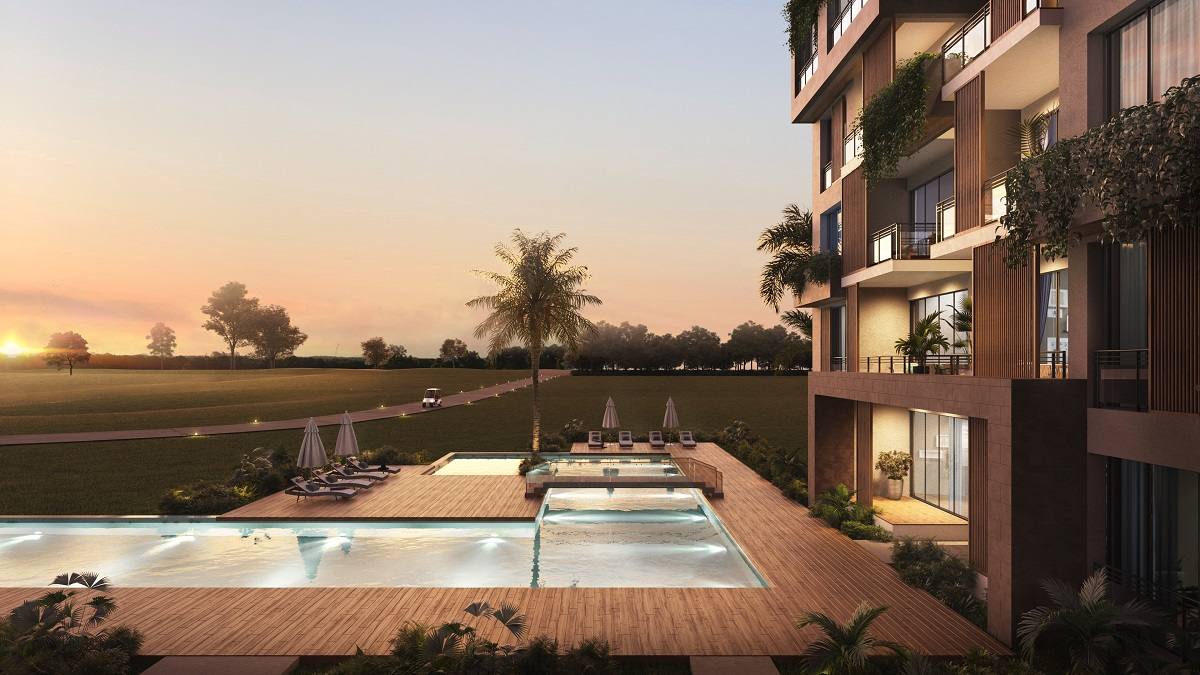
At Riviera Bay, daily life is shaped by the Cana Bay community. You might start your day with a round of golf at the Hard Rock Golf Club, spend the afternoon at the private residents' beach club, and have dinner at a restaurant within the gates. It’s a lifestyle of convenience and exclusivity, where your main amenities are just a short golf cart ride away. It's quiet, secure, and family-friendly.
In Cancun, daily life is more integrated with the public city. You might walk from your condo to a public beach, take a bus to a large shopping mall like La Isla, and choose from hundreds of public restaurants and bars. The atmosphere is energetic and social, with a constant flow of tourists and locals. It’s an ideal choice for those who want the constant stimulation of an urban environment right on the beach.
How Does Travel and Accessibility Compare?
Both destinations are exceptionally well-served by international airports. Punta Cana International Airport (PUJ) took 5,275,492 foreign non-resident arrivals during 2025, which the Banco Central puts at 71.9% of the Dominican Republic's national total, and carries direct service from North America and Europe. That is a national share rather than a Caribbean ranking, which is a distinction worth keeping: we have no sourced ranking of the airport against its neighbours and do not claim one. From PUJ, it's about a 20-minute drive to the entrance of Cana Bay, making your arrival smooth and straightforward.
Cancun International Airport (CUN) is also a major international hub, with extensive flights from around the world. The airport is located at the southern end of the Hotel Zone, and travel time to a specific property can vary depending on traffic along the main Kukulcan Boulevard.
On the ground, Punta Cana's spread-out communities mean a car is generally recommended for exploring outside your immediate resort area. In Cancun's Hotel Zone, the excellent public bus system makes it easy to get around without a private vehicle.
What About Construction Standards and Hurricane Season?
Both regions are in the Atlantic hurricane belt, and the official season runs from June 1 to November 30. Consequently, modern construction in both locations is designed with storm resilience in mind.
In the Dominican Republic, new construction is governed by a national building code. This code, updated in 2026, sets mandatory minimum requirements for wind load resistance that all new structures must be designed to meet. That the requirement is mandatory and national is the whole of what we can source: we hold nothing describing what the code specifies, and nothing assessing this or any other building against it. Ask the developer for the engineering documentation for your unit rather than inferring it from the existence of the code.
Mexico also has its own building codes and construction standards designed for its coastal areas. Any buyer considering a property in either location should inquire about the specific structural design and materials used.
Where Does Riviera Bay Fit into the Punta Cana Experience?
Riviera Bay embodies the Punta Cana model of a lifestyle investment. It offers the security and amenities of the master-planned Cana Bay community, combined with the financial advantages of the CONFOTUR law. With residences starting from one-bedroom, 720-square-foot units up to three-bedroom plans, it's designed for both personal use and rental income potential.
Developed by Noval Properties, a firm with 22+ years of experience and more than 3,000 homes delivered in the Dominican Republic, Riviera Bay sits squarely inside the Punta Cana model this guide describes. The fact that all units are delivered fully furnished means you have a turnkey asset, ready to be enjoyed or entered into the optional rental program from day one. It’s the Punta Cana lifestyle, distilled into a single, accessible ownership opportunity.
Common questions
- Is Punta Cana more of a city or a collection of resorts?
- Punta Cana is best described as a collection of large, self-contained resort communities rather than a traditional city. While there are local towns like Verón and Bávaro, the primary tourist and residential areas for foreigners are within these gated master-planned developments, each with its own amenities.
- Can I own property directly as a foreigner in Punta Cana?
- Yes. The Dominican Republic allows foreigners to hold direct, fee-simple title to real estate in their own name, with the same rights and protections as a Dominican citizen. There is no need for a special trust or local partner.
- Which destination has better beaches?
- Both Punta Cana and Cancun are world-famous for their stunning white-sand beaches and turquoise waters. The choice often comes down to personal preference. Punta Cana's beaches, like Bávaro Beach, are known for being wide and lined with palm trees, while Cancun's are known for their vibrant color and are set against the backdrop of the Hotel Zone.
Want the details for your own situation?
Ask about availability, layouts or the buying process, and someone from the sales team will get back to you.
Get in touch