Investing in the Dominican Republic, Starting From the Title Rather Than the Return
Most conversations about investing in the Dominican Republic open with a percentage. This one opens with a document, because the return on a property can only ever be as sound as the right you hold over it. What follows works through the questions an investor should be able to answer before signing: what the law lets a foreigner own, what a pre-construction buyer is legally acquiring, which checks can be run without relying on anyone selling the unit, what the measured demand figures show, and where gross becomes net. The development used as the worked example is Riviera Bay, 110 furnished residences at Cana Bay, Punta Cana.
What does a foreign investor legally hold?
The short answer is the same thing a Dominican holds. There is no separate regime for foreign buyers to cite: the right a non-Dominican takes is the ordinary property right in Article 51 of the Constitution, the requirement for presidential approval before a foreigner could buy was abolished by Decreto 21-98 in 1998, and the foreign-investment statute, Ley 16-95, puts foreign and national investors on equal terms in its sixth article. You need no residency to buy and no permit to hold.
That settles whether you may own. It does not settle what, precisely, you will own, and that second question is where Dominican practice differs from what a buyer from Madrid, Bogotá or Mexico City tends to assume. At home the reference document is the escritura pública. Here its counterpart is the contrato definitivo de venta, signed before a notary — but the contract is not the moment you become the owner. Ley 108-05, the Real Estate Registry Law of 2005, makes registration constitutive in Article 90: the right exists because it is entered in the Registro de Títulos, and the registry's content is presumed accurate. The document that then proves ownership is the certificado de título, which Article 91 describes as issued and guaranteed by the State.
One line of the investment statute needs care rather than enthusiasm. Its remittance article is written around investment in the capital of a company, and the text does not say how it treats a private individual buying a residence in their own name. If moving proceeds abroad matters to your plan, put that exact question to a Dominican attorney before you choose how to hold the property.
What does a pre-construction buyer actually acquire?
Buying off-plan means signing before the thing you are buying exists as a registered unit. Most such purchases begin with a contrato de promesa de venta, which governs the relationship between the parties while the building rises; it is an agreement to sell, not a sale, and it transfers no ownership. Ownership arrives later, when the definitive contract is registered.
For a condominium there is a further layer. Under Article 101 of Ley 108-05 the condominium itself comes into legal existence when it is registered, and only then does each private unit receive its own certificado de título. The governing statute is Ley 5038 of 1958, as modified by the registry law, and the Registro Inmobiliario publishes a single service covering both a finished regime and one registered while still in process. That tells you a defined route exists. It tells you nothing about where any particular project stands on it, which is a question for your attorney to answer from documents, not from a brochure.
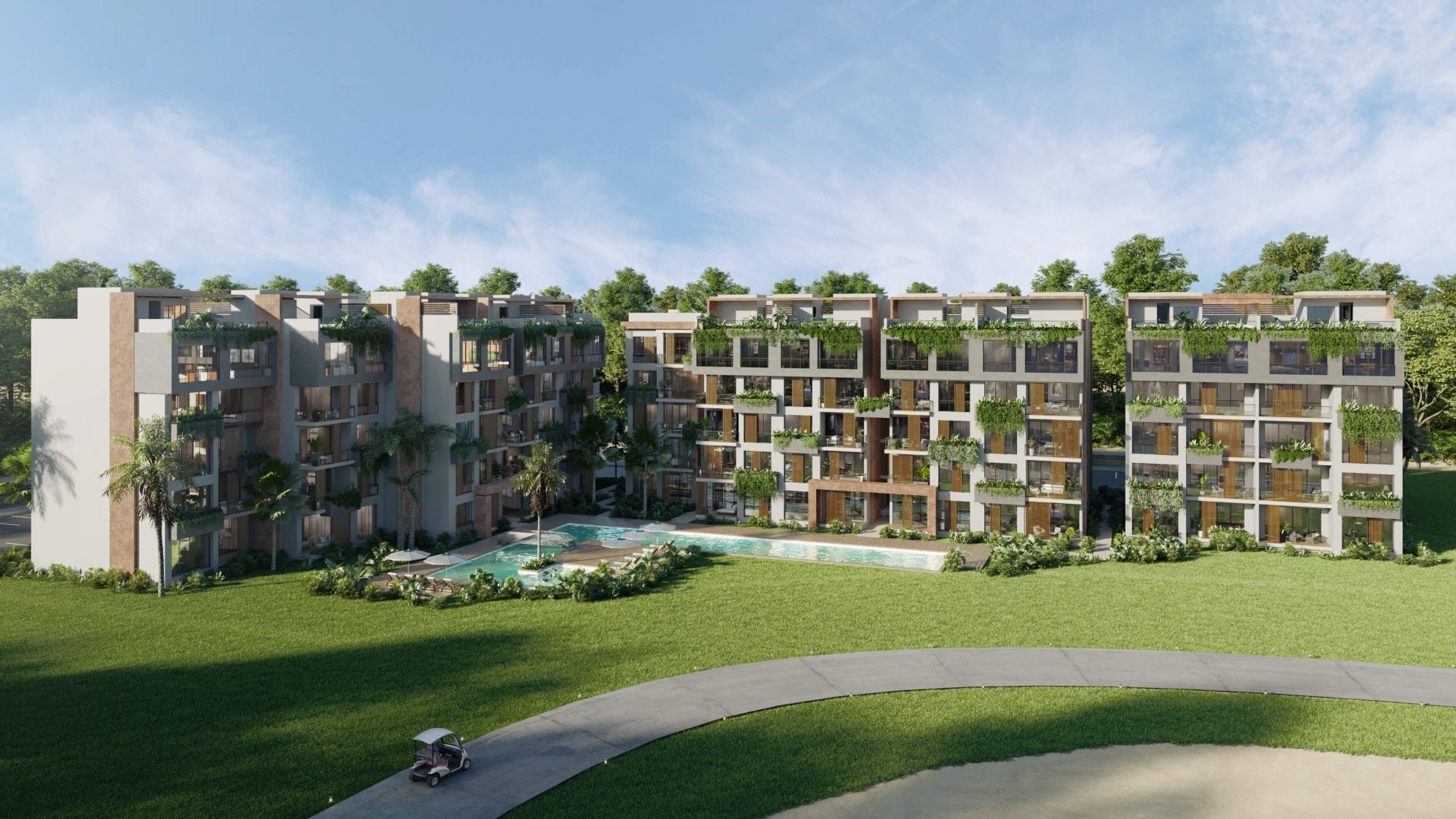
Applied to Riviera Bay, the object of the investment is one of 110 residences, from a 720 sq ft one-bedroom to a 1,418 sq ft three-bedroom, priced from $210,000 to $390,000 and handed over furnished. The pre-construction trade is the same everywhere: an earlier entry and a choice of layout, in exchange for carrying delivery risk. The honest counterweight to that risk is a record you can check, and the developer here publishes its own: active since 2003, with more than 3,000 units delivered.
It is also worth knowing that Dominican law provides a specific vehicle for real-estate development, the fideicomiso de desarrollo inmobiliario of Article 58 of Ley 189-11, a separate estate run by a fiduciary. Whether a given project uses one is a factual question with a documentary answer; ask for it rather than assume it either way.
Which checks can you run without relying on the seller?
Much of Dominican due diligence can be done against public institutions rather than against the word of anyone involved in the sale. Your attorney will run these as a matter of course; knowing what they are lets you ask whether they were run, and read the answers yourself.
-
Read the land's current legal status The Registro de Títulos issues a Certificación del Estado Jurídico del Inmueble for RD$1,000 per property. It is the current read of the registry, including charges and annotations; a certificado de título, by contrast, shows the registry only as it stood on the day it was printed.
-
Locate the parcel on the public map The Registro Inmobiliario's Consulta Geográfica shows approved, historical and annulled parcels. Seeing the parcel where the plans place it is a simple check that the land in the contract is the land on the ground.
-
Know which kind of title sits underneath A constancia anotada records an area of land inside a larger parcel without fixing where it is. Article 129 of Ley 108-05 stopped new ones being issued over registered land, with an exception for property already under a condominium regime, so ask which document the land is held under.
-
Look the project up with CONFOTUR The tourism council's portal lets anyone check a project's classification, filtered by provisional or definitive, by status and by province. Read the entry on the day you rely on it.
-
Have the condominium papers reviewed For a condominium unit the attorney's file covers the declaración de condominio, the reglamento de condominio and the approved construction plans. The reglamento is the one an investor should read personally, for the reason in the next section.
Where would rental demand come from?
This is the part of the case that can be measured rather than argued. The Banco Central counted 5,275,492 foreign non-resident arrivals entering the Dominican Republic through Punta Cana International Airport in 2025, 71.9% of the national total. In the same year, hotels in the Punta Cana/Bávaro zone ran at 81.6% occupancy, against 75.0% for the country as a whole; La Romana/Bayahíbe read slightly higher still, so this is a strong zone rather than a unique one.
Be precise about what those numbers are. They count air passengers and hotel rooms. They are not the occupancy of condominiums, not the performance of vacation rentals, and not a forecast for any residence, including these. What they establish is that the visitor flow a rental plan depends on is real and concentrated in this part of the country. Riviera Bay's published drive times put Punta Cana International Airport at 20 min and Bávaro Beach at 5 min, which places the residences inside that flow rather than at its edge.
The legal side of renting has one rule an investor must not skip. National law permits short-term letting; the binding constraint is the condominium's own bylaws. That makes the reglamento de condominio an investment document, not an administrative one: whatever a spreadsheet assumes about nightly lets has to survive a reading of it.
What separates the gross figure from the net one?
A projected return is a gross idea until tax has been applied to it. Two published rates belong in any model. A non-resident owner's Dominican rental income is subject to a 27% withholding calculated on the gross amount, with no deductions, as a single and definitive payment. And short-term tourist accommodation carries 18% ITBIS, for which the host is liable rather than the booking platform. Rates change, so confirm both before you rely on them.
On the other side of the ledger sits Law 158-01, CONFOTUR. For a first purchase from the developer of a unit in a classified project it removes the 3% transfer tax at closing and provides for exemption from the 1% annual property tax for 15 years. It must be filed and recorded on the title, and a resale buyer does not inherit the transfer-tax saving. How it interacts with the tax on rental earnings is something no source we hold settles, so treat that as a question for your attorney rather than a line in the model.
Riviera Bay's site publishes a projected return of 12–15%. It is a projection, not an achieved figure and not a promise. The useful response is to ask for the assumptions behind it — occupancy, nightly rate, management cost, fees — and then run them past the two tax rates above, so that the figure you compare with other options is the one that would actually reach you.
Which risks should be written down before you commit?
Every investment carries risks; the discipline is naming them before the contract, when they are still cheap to price. For a Dominican pre-construction condominium, four belong on the list.
Delivery. Until handover you own a contractual position, not a registered unit. The developer's completed record is the evidence that bears on this, which is why it matters more than any rendering.
Rules of the building. Short-term letting depends on the reglamento, and so does much of the running cost. Read it before modelling income, not after.
Valuation. No published index prices this market. The Banco Central's house-price index is built from local mortgage records concentrated in the metropolitan area of Santo Domingo, so it cannot tell you what a condominium in La Altagracia is worth or has done. Any claim of appreciation in Punta Cana is therefore an opinion without a benchmark, and should be weighed as one.
Currency. Prices here are quoted in US dollars while local costs are paid in pesos, so an investor whose own money is in euros or another currency is holding a second exposure alongside the property.
None of that argues against investing. It argues for doing it in the right order: the title first, the documents second, the demand third, and the percentage last, once everything underneath it has been checked.
Common questions
- Do I need Dominican residency to invest in property here?
- No. A foreign national can buy and hold Dominican real estate in their own name on the same terms as a Dominican, with no residency requirement and no approval step. Residency is a separate immigration process that runs on its own paperwork, if you want it at all.
- When do I actually become the owner of a pre-construction unit?
- When the definitive sale contract is registered and the unit has its own certificado de título. Under Ley 108-05 registration is what creates the right, and a condominium's individual units receive their certificates once the condominium itself is registered. Until then your position rests on the contract you signed.
- Does 81.6% hotel occupancy mean a Riviera Bay residence would rent at that rate?
- No. That is the Banco Central's figure for hotel rooms in the Punta Cana/Bávaro zone across 2025. It shows the depth of visitor demand in the area; it is not a measure of how any condominium or vacation rental performs, and it should never be pasted into an income model as if it were.
- What is the single most useful document to request before signing?
- Alongside your attorney's review, the Certificación del Estado Jurídico del Inmueble: at RD$1,000 it gives the registry's current reading of the land, including any charges or annotations. For a condominium, add the reglamento, because it decides what you may do with the unit once it is yours.
Want the details for your own situation?
Ask about availability, layouts or the buying process, and someone from the sales team will get back to you.
Get in touch