Buying a home in the Dominican Republic as a foreigner: what changes after you sign
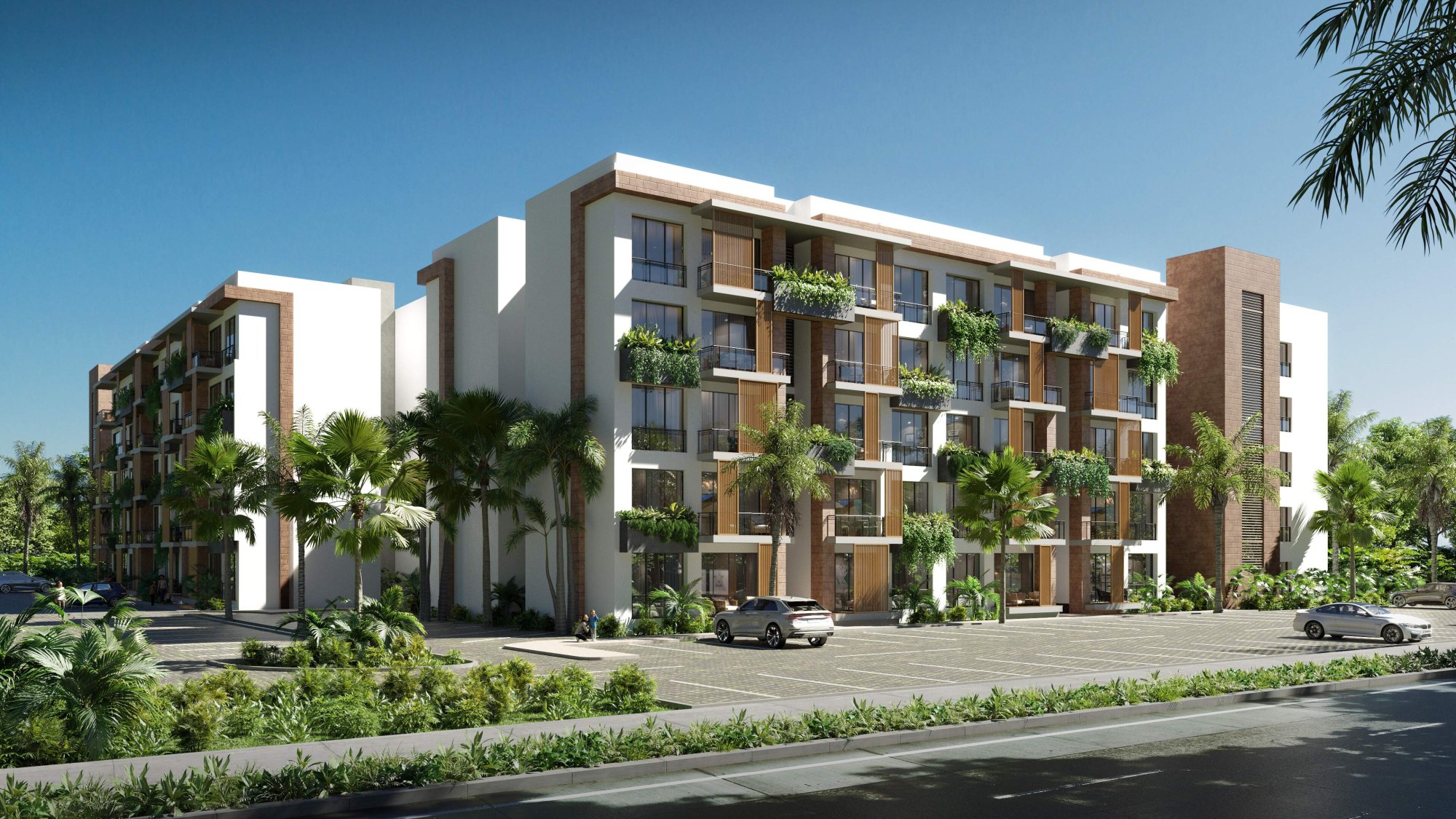
A foreigner who buys a home in the Dominican Republic receives exactly the title a Dominican would, so the useful question is a different one: at which moments of ownership does being a non-resident actually show up? It shows up when you borrow, when you rent, when you pay tax and when you sell, and it rests on a distinction most buyers never draw, between the passport you carry, the residency you may or may not hold, and the country where you are resident for tax. This guide takes those moments in the order an owner meets them, using Riviera Bay, 110 furnished residences at Cana Bay, Punta Cana, priced from $210,000, as the worked example.
Does being a foreigner limit what you can own?
No. A buyer at Riviera Bay who holds a foreign passport takes the same registered title over one of its 110 residences as a Dominican buyer would. The property right comes from Article 51 of the Constitution, and the rule that once made foreigners seek the President's consent before buying land was swept away by Decreto 21-98 in 1998; all that survives of it is a statistical note the title registry keeps on its own account, not a step you take. Title itself is recorded under Ley 108-05, the Real Estate Registry Law, in your own name.
What being foreign does change is the set of statuses that follow you once the contract is signed. Three of them are easy to confuse, and each one governs a different part of ownership.
| Status | What decides it | What it changes for an owner |
|---|---|---|
| Nationality | Your passport | Nothing about the right to buy or hold title; the registry asks a foreign party for a passport and the identity document of their home country |
| Immigration residency | A separate application under Ley 285-04 | Whether you may live in the country long term; an owner is not required to hold it |
| Tax residency | Days spent in the country, measured against 182 | Whether your Dominican rent and gains are taxed as a non-resident's |
Can you borrow from a Dominican bank while living abroad?
Yes, but the loan is secured on the Dominican home itself, and for Riviera Bay that means a residence priced between $210,000 and $390,000. One state-owned bank's published product for people resident abroad refuses property outside the country as collateral, lends in Dominican pesos for up to 20 years, and asks for income evidence from the borrower's own country (for a US resident, IRS-certified returns and W-2 forms for the last two years) together with a certification of the property's legal status. That is one lender's sheet, dated, not a description of the market.
Market sources writing in early 2026 reported mortgage rates for foreign borrowers in a band of roughly 8% to 13.5%, with 15 years the most common term for non-residents. Treat that as a reported range and ask for a current quote, because for a pre-construction residence the rate that matters is the one available at delivery, not the one quoted today. Registering a mortgage also carries its own tax of 2% of the secured amount, paid to the DGII before the registry inscribes it, with loans up to RD$1,000,000 exempt. It is a tax on the loan, separate from anything owed on the purchase.
What does a home cost to hold from another country?
For an owner who lives elsewhere, the annual property tax, the IPI, is the recurring charge to plan for: it runs at 1%, charged only on value above an exempt threshold that is adjusted every year. Law 158-01, CONFOTUR, provides a fifteen-year IPI exemption for qualifying tourism projects and removes the 3% transfer tax when a first buyer acquires from the developer. Neither benefit is automatic: it has to be filed and recorded on the title, and how it applies to a particular unit and owner is a question for your attorney rather than a line to assume.
Distance changes the rest of the routine more than the cost. The Dominican Republic keeps Atlantic Standard Time all year, the same clock as US Eastern from March to November and one hour ahead of it in winter, which makes calls with a building manager or an attorney easy to schedule from North America. Riviera Bay is 20 min from Punta Cana International Airport and 5 min from Bávaro Beach, and each residence is handed over furnished, so an owner arriving for a week is not furnishing from scratch.
How is rent taxed when the owner lives abroad?
Rent from a Dominican home paid to an owner who is not resident for tax is subject to a 27% withholding calculated on the gross amount, with no deductions, as a single and definitive payment. Short tourist stays also carry 18% ITBIS, for which the host is liable rather than the booking platform, while a home let as a permanent residence is exempt from ITBIS under Article 344 of the Tax Code. Rates change, so confirm both on the day you rely on them.
CONFOTUR's exemptions concern the transfer tax and the IPI; rental income is taxed on its own terms, so ask your attorney how the two interact for your case rather than assuming the exemption reaches rent. Whether short stays are permitted at all is a matter for the building's reglamento de condominio, because national law allows them and the bylaws set the limits.
Riviera Bay's site publishes a projected return of 12–15% for residences placed in its optional managed rental program. It is a projection, not a result. A non-resident owner should ask whether that figure is stated before or after the two taxes above, and who files the ITBIS under the program.
What happens when a non-resident owner sells?
Ley 30-26, dated 18 June 2026, set a 10% rate on capital gains from real estate for individuals, paid as a single and definitive amount outside the ordinary income-tax scale. No DGII material read for this guide says whether that rate reaches an individual who is not resident in the Dominican Republic, and specialist commentary describes the point as awaiting regulation. Before the reform, the DGII's published rate for a foreign individual was 27%; that is the earlier position, and it should be neither relied on nor ruled out for a sale today.
The mechanics are clearer than the rate. The gain is the sale price less the acquisition cost adjusted for inflation, and improvements properly added to the capital account raise that cost, although the law leaves part of the detail to regulation. When the seller is a non-resident, the resident buyer acts as withholding agent and holds back the full tax generated. Payment falls due within six months of the transfer; confirm the exact trigger date with an adviser. The two exemptions in the reform are written around a habitual residence, and whether a holiday or rental home counts is a question for that adviser too.
-
Keep the purchase file from day one The acquisition cost, adjusted for inflation, is the base of any future gain, so the contract, the registered title and the record of every improvement are worth keeping in one place from the start.
-
Confirm the rate before you list Ask a Dominican tax adviser which rate applies to you as a seller who is not resident in the country, given that the 2026 reform does not say.
-
Settle who withholds With a non-resident seller, the resident buyer withholds the tax generated; agree in the sale contract how that is evidenced.
-
Diary the six-month deadline Payment is due within six months of the transfer, and the date it runs from is one to fix with your adviser at signing.
-
Price in what the next buyer does not get CONFOTUR's transfer-tax relief is for first buyers from the developer only, so a resale buyer pays the 3% transfer tax that you did not.
Does buying a home give you residency?
Not by itself. Residency in the Dominican Republic is an immigration application with its own file, and owning a home at Riviera Bay neither requires it nor grants it. Ley 285-04 lists investors among the permanent-resident categories, and its implementing regulation, Decreto 631-11, sets the investor minimum at US$200,000. Sources disagree on whether, and at what amount, buying property counts towards that route, so no purchase, here or elsewhere, should be presented to you as one that qualifies.
Two other routes are built around income rather than property: Law 171-07 sets a minimum of US$1,500 a month for a pensioner and US$2,000 a month for a rentier with income from abroad. Whichever route interests you, take it to an immigration attorney as a separate question, and remember the point from the first section: a residency card and tax residence are decided by different tests.
Common questions
- If I spend the winter at my Riviera Bay condo, do I become a Dominican tax resident?
- The tax test counts the days you are physically in the country, with 182 as the threshold, and it is separate from any residency card. Keep a count of your days each year and ask a Dominican tax adviser how they are measured in your case, because the answer decides whether your rent is taxed as a non-resident's.
- Does buying at Riviera Bay come with residency?
- No. Residency is a separate immigration application. An investor category exists, with a US$200,000 minimum in its regulation, but sources disagree on whether a property purchase counts towards it, so treat any promise that a condo purchase qualifies with caution and ask an immigration attorney.
- Who pays the tax when a non-resident sells a Dominican home?
- The seller owes it, but when the seller is not resident the buyer acts as withholding agent and holds back the full tax generated. Under the June 2026 reform individuals pay 10% on real-estate gains; whether that reaches a non-resident is not yet stated, so confirm the rate before you agree a price.
- Can I let my residence while I live in another country?
- National law allows short stays, the building's bylaws decide the limits, and Riviera Bay's site publishes an optional managed rental program. From abroad, the points to settle are the 27% withholding on gross rent and the 18% ITBIS on short stays, which the host owes rather than the booking platform.
Want the details for your own situation?
Ask about availability, layouts or the buying process, and someone from the sales team will get back to you.
Get in touch