Closing on a Riviera Bay Condo From Abroad: Where a Power of Attorney Fits
A Dominican power of attorney (a poder) lets a person you choose sign for you in the Dominican Republic, and for a Riviera Bay buyer it matters most at one moment: the definitive deed signed when the residence is delivered. The rest of a closing from abroad — the reservation, the promise of sale, the registry file — can often be handled with your own signature and a courier, or by an attorney filing papers rather than signing as owner. This page walks the Cana Bay purchase in order and says what the person holding your power may and may not do at each step; it is general information to check with an independent Dominican attorney who acts for you alone.
Which steps of a Riviera Bay closing actually need someone to sign for you?
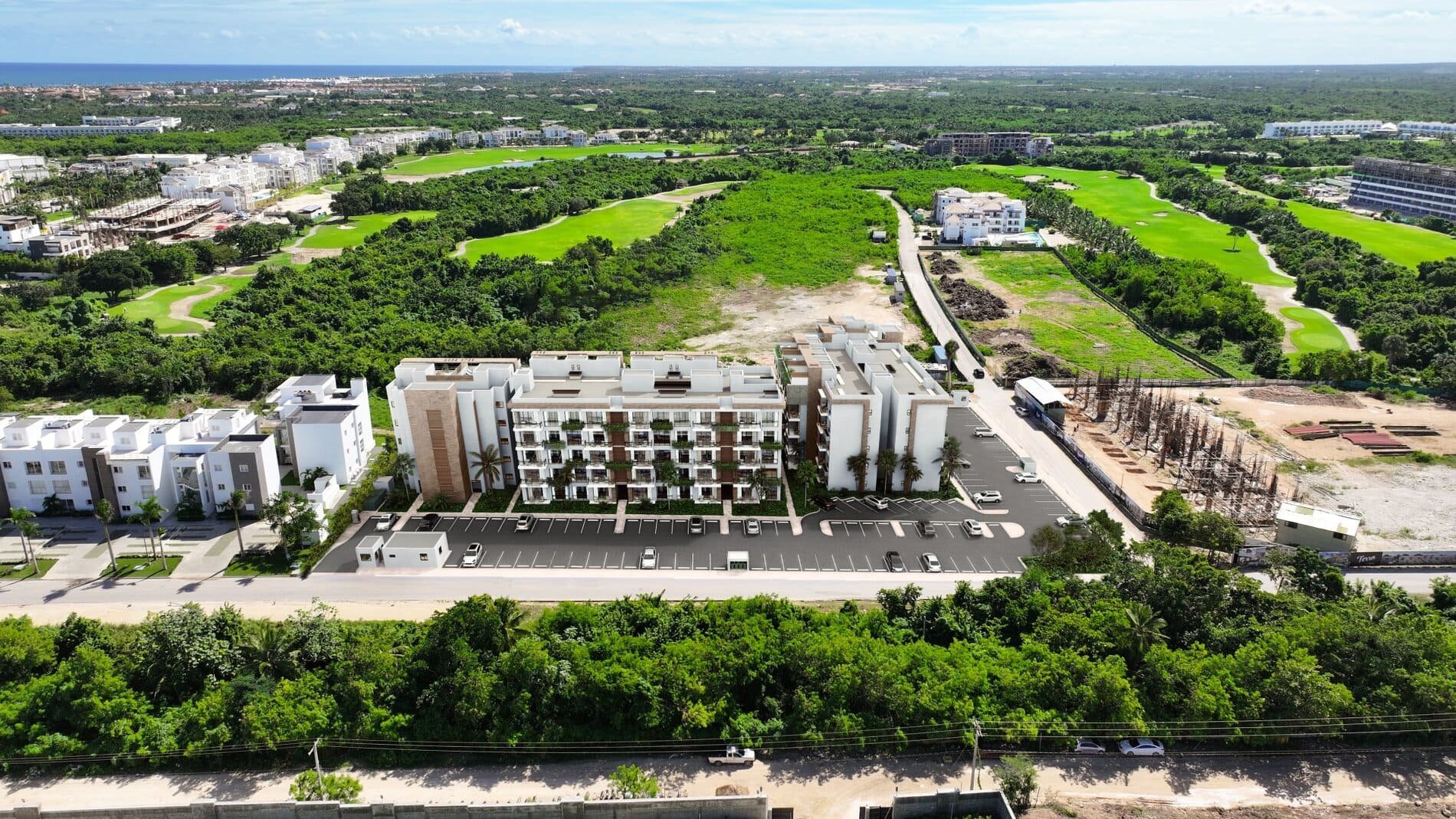
An off-plan purchase at Riviera Bay, a building of 110 residences at Cana Bay in Punta Cana, is not one signature but a sequence of them spread over the construction period. Ownership itself arrives last: in the Dominican system it is the registry entry that creates the right (Ley 108-05, Article 90), so until the Registro de Títulos records the transfer, nothing you have signed has yet made you the owner. Each moment in that sequence asks a different question of a power of attorney, and the table below is the map to agree with your attorney before anyone drafts a word.
Read the right-hand column as carefully as the middle one. Article 1989 of the Civil Code stops an agent from doing anything beyond what the mandate contains, and Article 1998 releases you from what was done outside it unless you later ratify it. The limits you write down are the protection you get.
| Moment | Who usually signs | What the person holding your power can do | What they should not be able to do |
|---|---|---|---|
| Reservation | You, from home | Usually nothing; ask your attorney whether your own signature sent by courier is enough | Pick a different residence or accept changed terms on your behalf |
| Promise of sale (promesa de venta) | You, after your attorney has reviewed it | Sign it only if the power names that act and that residence | Treat the promise as a transfer of ownership, which it is not |
| Definitive deed at delivery | The holder of a special power, if you do not travel | Sign the deed for the named residence, because the power grants that act expressly | Mortgage, resell or reassign the residence unless you wrote those acts in |
| Registration at the Registro de Títulos | Your attorney, as the filer | Lodge the transfer file, including the power and the representative's identity documents, and collect the certificate of title | Keep documents received in your name without accounting for them |
| After delivery | A relative or manager under a separate power | The acts of administration you list: the condominium, utilities, keys and contractors | Any act of ownership, which general wording cannot reach |
Can I sign the reservation and the promise of sale myself from home?
Usually, yes, and there are good reasons to. These are the documents in which the residence is chosen and the terms of the purchase are set, so they are the ones you most want to read and sign in your own hand. The promise of sale (promesa de venta) governs an off-plan purchase from its opening until the definitive sale contract is signed, and it does not itself pass ownership. Your attorney reviews it before you sign, and the signed copies can travel by courier without anyone in the Dominican Republic acting in your name.
What you settle now shapes the power you sign later. The promise identifies the residence — its building, its floor plan and its unit — and the deed at delivery will have to match it. If the deed will be signed for you, ask your attorney to carry that identification word for word into the power, so that authority over a one-bedroom of 720 sq ft in one building cannot be read as authority over any other unit. Agree, too, who will hold the power, and confirm that the person has no tie to the seller: the agent's duty runs to you, and it should be the only duty they have in this transaction.
If you would rather not sign the promise yourself, a narrow power can cover that one act. Article 1985 allows a mandate to be given by notarial act or under private signature, but whether a particular form will be accepted for a particular act is a judgement for your attorney, never something to assume.
How do I prepare the power for the deed at delivery?
The deed at delivery is the act a power of attorney exists for. Signing a sale is an act of ownership, and Article 1988 of the Civil Code is plain that a mandate written in general terms reaches only acts of administration; anything that disposes of property must be granted expressly. So the deed power is a poder especial: one residence, the listed acts, and a named person.
Timing is where buyers abroad slip. The Code gives a mandate no shelf life of its own — under Article 2003 it ends on revocation, on the agent's renunciation, or on the death, interdiction or insolvency of either side — so any end date is one you choose. Sign too early and the power sits open for the whole build; sign too late and the documents may not be certified, translated and delivered by the time the notary is booked. The practical answer is to work backwards from the delivery date you are given, with your attorney setting each step.
Distance adds one more variable. The Dominican Republic keeps Atlantic Standard Time all year without daylight saving, which puts Punta Cana on the same clock as US Eastern from March to November and an hour ahead of it in winter. Buyers in Europe or on the Pacific coast should agree in writing which day, and whose working hours, a deadline refers to.
-
Agree the scope and the end date List the residence, the acts — signing the definitive deed, filing the transfer, collecting the title — and the date after which the power lapses.
-
Sign before a notary where you live, or at a consulate Dominican consuls abroad can act as notaries for acts meant to take effect in the country; a buyer who is not a Dominican national should ask the consulate, and the attorney, whether it will receive the power before booking an appointment.
-
Add the certification your attorney specifies The Hague Apostille Convention has applied in the Dominican Republic since 2009, and the registry's notes also mention Foreign Ministry legalisation for documents about a property transfer; which of the two your power needs is your attorney's call.
-
Have it translated by a judicial interpreter A power in any language other than Spanish travels with a judicial interpreter's translation, and in Dominican practice the interpreter's signature is then legalised at the Procuraduría General de la República.
-
Courier the original and confirm it arrived Send the original to the person who will sign, ask your attorney whether anything less is accepted, and get written confirmation that the file is complete before the deed date is fixed.
What happens at the title registry once the deed is signed?
Signing the deed is not the finish line; registration is. The Registro de Títulos works from a published list when it records a transfer by sale, and three items on it change when someone signs for you: the power of representation itself, the identity documents of the representative alongside those of the parties, and — because you are a foreign party — your passport plus the national identity document of your own country as a second official document. If the title names no spouse while an identity document shows a different civil status, a marriage certificate is asked for too, so a married buyer should settle with the attorney beforehand whether the spouse joins the power.
The file does not have to be carried to one particular office: it can be lodged at any Registro de Títulos by remote deposit or through the Registro Inmobiliario's virtual office. The registry also asks for a DGII certificate on the property's annual tax (IPI), valid on the filing date and showing the property up to date or exempt, with the transfer-tax receipt or a DGII exemption certificate. Where a purchase qualifies for CONFOTUR, the exemption from the 3% transfer tax reaches only first buyers from the developer and has to be filed and recorded on the title, so it belongs on the list of acts the power names.
In a building held as a condominium, each unit carries its own certificate of title once the condominium regime is registered, and that certificate is what your attorney should send you when the file closes. Under Article 1993 the person who acted for you owes you an account of everything done and must hand over whatever was received on your behalf — the certificate included.
Who can look after the condo once it is delivered, and under what kind of power?
Once the residence is yours, the signing changes character. Day-to-day matters — the condominium administration, utilities and service contracts, keys, letting contractors in after a storm — are acts of administration, which is exactly what a power drafted in general terms is allowed to cover under Article 1988. That makes a separate, administration-only power the natural document for a relative or a property manager who looks after a Riviera Bay unit while you are away.
Keep it apart from the deed power, for three reasons:
- Different person, different trust. The attorney who closed for you is rarely the person who should take calls about a leaking terrace.
- A built-in ceiling. Because general wording reaches administration only, the holder cannot sell or mortgage the unit unless you expressly add those acts, and you should not.
- Easier to end. Under Article 2004 you may revoke a mandate whenever you choose and ask for the document back; a power covering only management can be withdrawn without disturbing anything else.
Write in two more limits. Forbid substitution unless you name the substitute yourself, because under Article 1994 an agent who hands the task to someone else answers for that person when the power did not allow it. And set how often, and in what form, the holder reports to you. If you change managers, remember Article 2005: a revocation sent only to the old manager cannot be raised against third parties who dealt with them without knowing of it, so notify the condominium administration and any supplier who relied on the power. Naming a new agent for the same matter revokes the old one from the day the old one is told (Article 2006).
A power changes who signs, not who owns. Tax filings and condominium obligations remain yours; confirm with your attorney what the holder may file in your name.
When is a power of attorney the wrong tool?
A poder solves distance. It is not always the best answer, and a careful buyer uses as few as the purchase allows.
- When you can be there. If a trip to Punta Cana is already planned around delivery, signing the deed in person removes the drafting, the certification, the translation and the courier — and the risk that one of them is not ready on the day.
- When the act is one you would rather keep. Borrowing against the unit, reselling it or reassigning your contract are acts of ownership; leave them out of every power unless you truly mean them, and sign them yourself where you can.
- When the only candidate sits on the other side of the deal. Nobody connected to the seller should hold your power. If you have no independent Dominican attorney yet, appoint one before you sign any power at all.
- When the route is still uncertain. If the consulate will not confirm that it receives powers from non-nationals, or your attorney cannot yet say whether the apostille or Foreign Ministry legalisation applies, wait for the answer rather than signing a document that may come back.
- When an earlier power is still open. Before granting a new one for the same matter, decide whether the first should end, and tell everyone who relied on it.
Each of these is a conversation for an independent Dominican attorney you choose and pay, who acts for you alone. This page explains how the pieces fit together; it is not legal advice on your file.
Common questions
- Can one power of attorney cover both the promise of sale and the deed at delivery?
- It can, if both acts and the residence are named expressly, but many buyers abroad sign the promise themselves and grant a power only for the deed, closer to delivery. Because the Civil Code gives a mandate no automatic end date, a single power signed at the start would stay open through construction unless you write an expiry into it.
- Does the person holding my power have to be in Punta Cana?
- Not for the registry filing: the transfer file can be lodged at any Registro de Títulos by remote deposit or through the Registro Inmobiliario's virtual office. The deed itself is signed before the notary your attorney arranges, so ask early who will attend and where.
- Can a family member look after my Riviera Bay condo under a power of attorney?
- Yes, through a power limited to administration — the condominium, utilities, keys and contractors. Wording in general terms covers acts of administration only, so a relative holding it cannot sell or mortgage the unit unless you add those acts expressly.
- What happens if I revoke the power in the middle of my closing?
- You may revoke whenever you choose, but tell everyone who might rely on it — the agent, the notary and the developer's legal team — because a revocation sent only to the agent cannot be raised against third parties who acted without knowing of it. What the agent did before learning of the revocation generally stands.
Want the details for your own situation?
Ask about availability, layouts or the buying process, and someone from the sales team will get back to you.
Get in touch